Placing You at the Centre of Care

Search

Neurotechnology

AMADEO®

Robotic hand therapy devices enable repetitive, task-oriented training of finger movements by combining active participation with adaptive assistance and sensory feedback.
What is the AMADEO®?
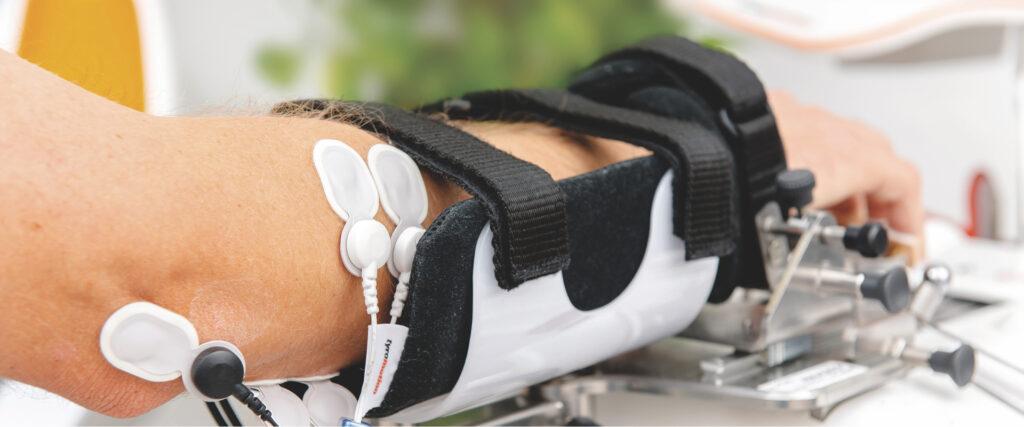
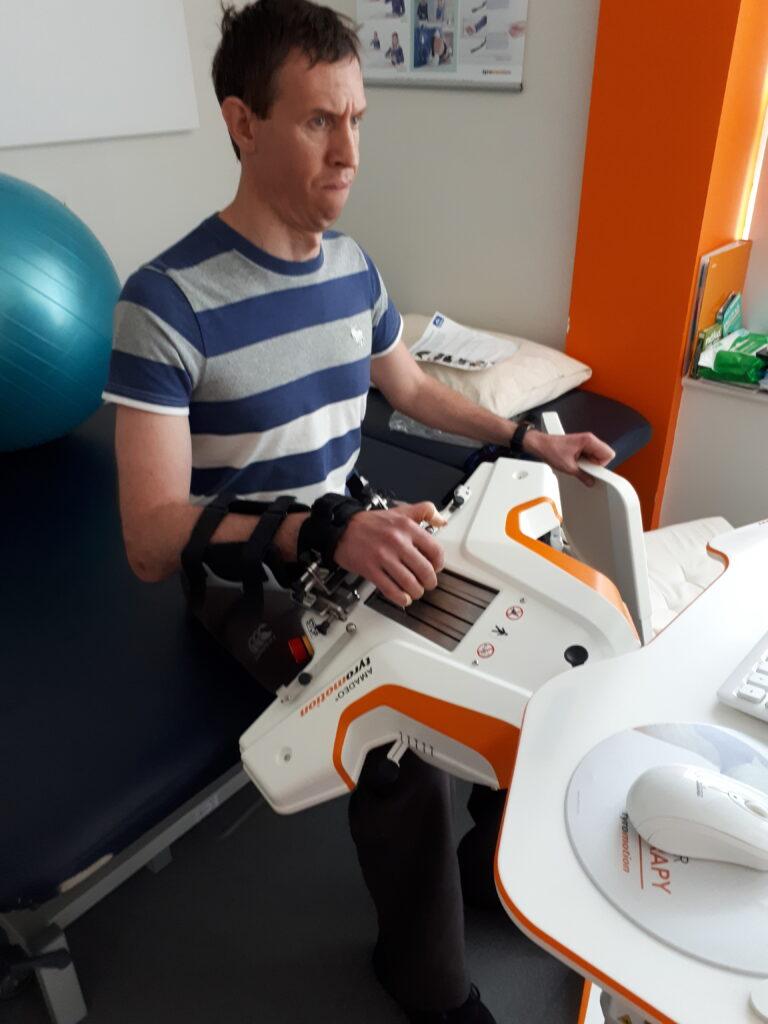
AMADEO, developed by Tyromotion, is a robotic device designed for hand and finger rehabilitation following neurological injury. It simulates natural grasping movements using motor-driven finger sliders, where each finger is individually attached via magnetic connectors. The system can operate in passive or active modes, allowing users to either receive guided movement or actively initiate movement with robotic assistance as needed. AMADEO incorporates force and motion-based training, enabling therapy to be adapted based on range of motion, strength, tone, and spasticity. It also includes a sensory stimulation function, where vibration can be applied to the limb to enhance sensory awareness before training. Interactive visual feedback and game-based exercises are integrated to support engagement and goal-oriented rehabilitation.
How does combining sensory input with movement training support hand recovery after neurological injury?
Combining sensory input with movement training helps improve the brain’s ability to process and integrate feedback from the affected limb. Sensory stimulation, such as vibration, can increase awareness of the hand and fingers, which may enhance motor control during subsequent movement tasks. When paired with repetitive, task-specific training, this can support neuroplasticity by reinforcing connections between sensory and motor pathways. As a result, individuals may experience improvements in coordination, grip control, and the ability to perform functional hand movements.

AMADEO is used for individuals with impaired hand function due to neurological conditions such as stroke, traumatic brain injury, spinal cord injury, and other disorders affecting the upper limb. It is suitable for patients across different stages of rehabilitation, from those with minimal voluntary movement to those working towards more functional hand use. Real-life goals that may be targeted include:

  • Grasping and releasing everyday objects (e.g. cups, utensils)

  • Improving the ability to hold and manipulate items during daily tasks

  • Increasing independence in personal care activities (e.g. dressing, grooming)

  • Enhancing participation in functional activities such as writing or using devices
    The device supports structured, repetitive training that contributes to improved strength, coordination, and functional hand use as part of a wider rehabilitation programme.

AMADEO uses a system of motorised finger sliders connected via magnetic attachments to each finger, allowing controlled guidance of grasping and releasing movements. The device can be programmed to respond to either movement or force, enabling therapy that targets both mobility and strength. During sessions, the device measures individual finger performance and adapts assistance accordingly, supporting users to move as actively as possible. The integrated sensory stimulation feature provides vibration input to the hand, which can be used prior to or during movement training to enhance sensory feedback. Visual displays and interactive games are incorporated to provide real-time feedback and encourage engagement throughout therapy.
At Hobbs Rehabilitation, AMADEO is integrated into multidisciplinary upper limb rehabilitation programmes as part of an individualised treatment plan. Clinicians assess factors such as active range of motion, finger strength, tone, and spasticity to tailor therapy settings to each user. The device is typically used alongside conventional neurophysiotherapy and may be combined with other technologies such as TYMOPABLO, and DIEGO to support a comprehensive approach to upper limb recovery. Sessions are designed to be progressive, using adjustable assistance, repetition, and task-based activities to help individuals work towards functional goals and improved independence in daily activities.

Let's Get Started

The equipment is available at Hobbs Rehabilitation Intensive Neurotherapy Centre (Bristol) – find your nearest centre.
Alternatively, call us on 01275 371262 to talk with our team or fill out our enquiry form on our contact page.

We accept self-referrals and referrals from Medico-Legal, health and social care professionals and the charity sector.

Please note: While the locations listed show where each device is normally available, some smaller pieces of equipment are occasionally shared between centres. Larger devices remain at their designated locations. For specific requests, please contact us, and we will advise on availability or alternatives.
Shape the Future Through Clinical Trials

Join our research trials - open to all, including non-Hobbs patients.

What Our Patients Say

Don’t just take our word for it – take theirs