Placing You at the Centre of Care

Fourier M2 & ArmMotus™ M2 Pro

Robotic upper limb systems enable adaptable, task-specific training by providing passive, assistive, active, and resistive modes to match each stage of recovery.

What is it?

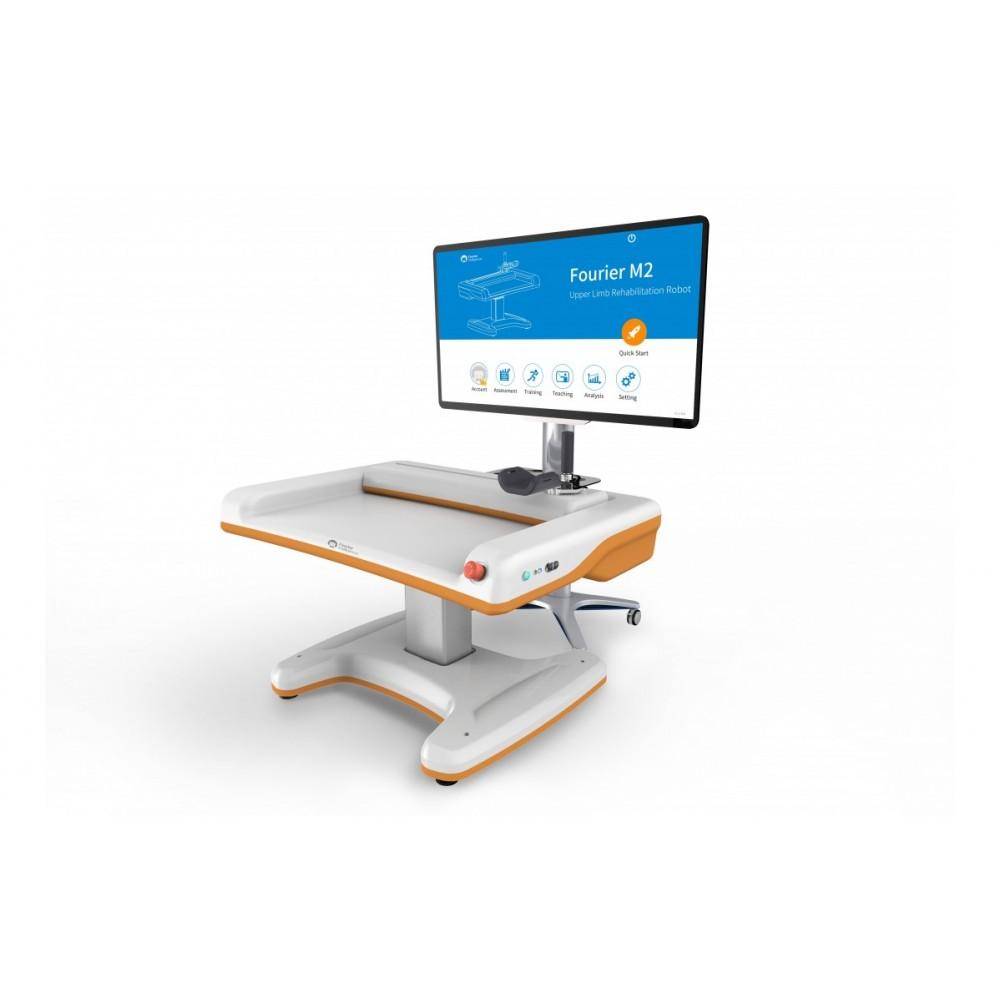
The Fourier M2 and ArmMotus™ M2 Pro (collectively referred to as the M2), developed by Fourier Intelligence, is a robotic, height-adjustable workstation designed for upper limb rehabilitation. It functions as an end-effector device, meaning it guides movement through the user’s hand and forearm rather than controlling each joint individually. The system provides four therapy modes, passive, assistive, active, and resistive, allowing therapy to be tailored to the user’s level of ability and progression. Using motors, sensors, and haptic feedback, the device enables controlled movement in two planes while engaging users in interactive, game-based exercises. It is designed for individuals with upper limb impairments affecting the shoulder and elbow, and can also support postural stability and trunk control as part of a broader rehabilitation approach.
How do different therapy modes in robotic rehabilitation devices support progression in upper limb recovery?
Different therapy modes allow rehabilitation to be matched to an individual’s current functional level and adjusted as recovery progresses. Passive mode supports individuals who cannot initiate movement, enabling guided repetition of movement patterns. Assistive mode provides support when the user begins to initiate movement but cannot complete tasks independently, while active mode allows users to perform movements with minimal assistance. Resistive mode introduces controlled resistance to help build strength and endurance. This graded approach enables continuous challenge, promotes motor learning, and supports gradual improvements in strength, coordination, and functional arm use.

M2 for Upper Limb Neurological Rehabilitation and Functional Recovery

The M2 is used for individuals with upper limb impairments such as weakness, poor coordination, abnormal movement patterns, increased muscle tone, and reduced endurance. It is commonly used in neurological rehabilitation for conditions affecting the shoulder and elbow, including stroke, traumatic brain injury, and other neurological disorders. In addition to upper limb training, the device can also support improvements in postural stability, trunk alignment, and balance, which are important foundations for effective arm function. It can be integrated into inpatient, outpatient, and intensive rehabilitation programmes as part of a structured, goal-oriented treatment plan.

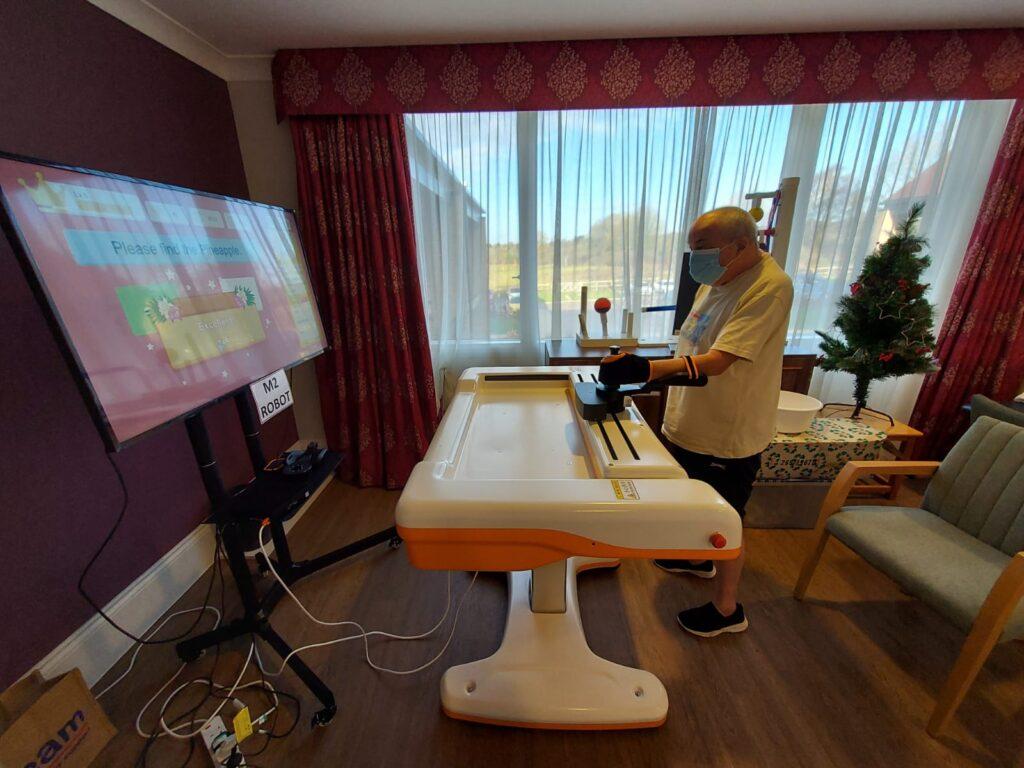
The M2 operates as an end-effector device, meaning movement is controlled through the user’s interaction with a hand-held control interface connected to the workstation. The device uses motors in two planes to guide and support movement, while built-in sensors detect user effort and movement intention. Haptic feedback provides additional sensory input, allowing the system to assist or resist movement as needed. Therapy is delivered through interactive, game-based tasks that encourage engagement while training coordinated movement patterns across the upper limb in a controlled and measurable way.
At Hobbs Rehabilitation, the M2 is incorporated into multidisciplinary rehabilitation programmes as part of a personalised approach to upper limb recovery. Clinicians use the device alongside conventional therapy and other interventions to support functional goals. Its adjustable setup and multiple therapy modes allow sessions to be tailored to the individual’s ability, progressing from passive support to active and resistive training. The system is used to deliver structured, repetitive, and interactive therapy aimed at improving movement quality, strength, coordination, and functional use of the upper limb within an intensive rehabilitation setting.

Let's Get Started

Use our online form to get in touch or find your nearest centre.

Alternatively, call us on 01962 779796 to speak to our team.

We accept self-referrals and referrals from Medico-Legal, health and social care professionals and the charity sector.

Please note: While the locations listed show where each device is normally available, some smaller pieces of equipment are occasionally shared between centres. Larger devices remain at their designated locations. For specific requests, please contact us, and we will advise on availability or alternatives.
Nigel’s Rehabilitation Story

Guillain-Barré Syndrome

Following Guillain-Barré syndrome, Nigel’s determination and intensive neurological rehabilitation helped him regain strength, mobility and independence, achieving milestones including standing, walking with support and returning to everyday activities.

Ian’s Rehabilitation Story

Stroke

Acquired Brain Injury

Following a stroke, Ian’s intensive rehabilitation helped him rebuild strength, communication and independence. Through multidisciplinary support, he made significant progress towards returning home and reconnecting with the life he values.
Patient entering details onto an enquiry form on a laptop
Enquire

Enquire today about any of our services or packages
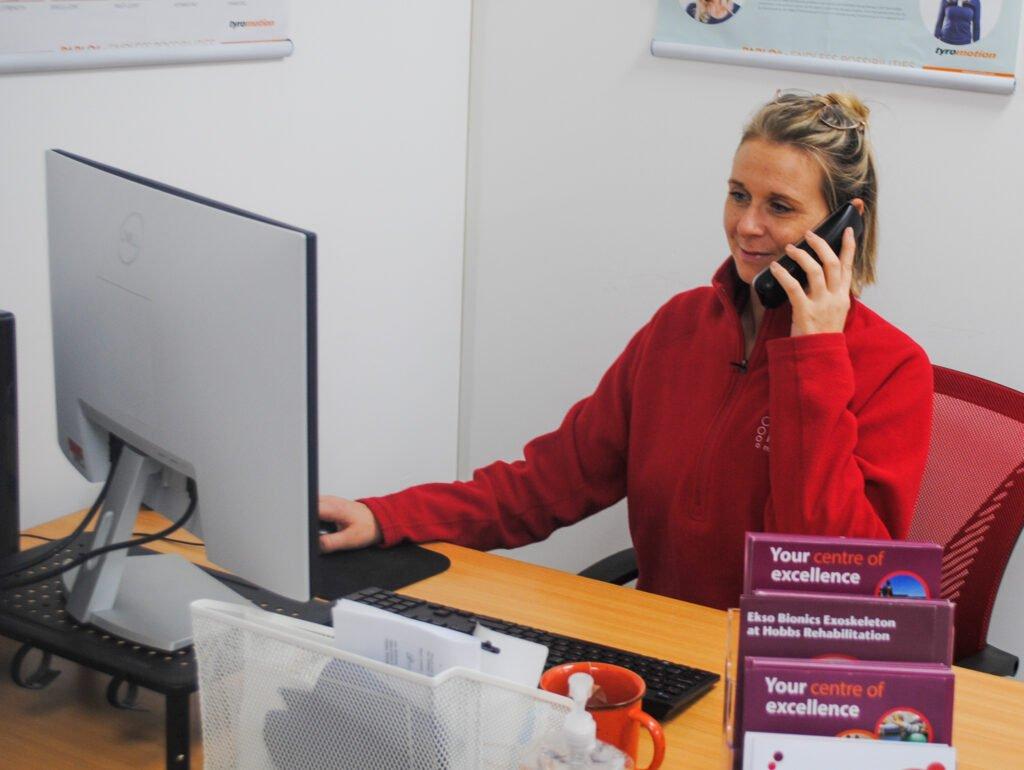
Therapist taking a telephone screening for Hobbs Rehabilitation
Screen

You will be contacted to determine your needs and assessment location
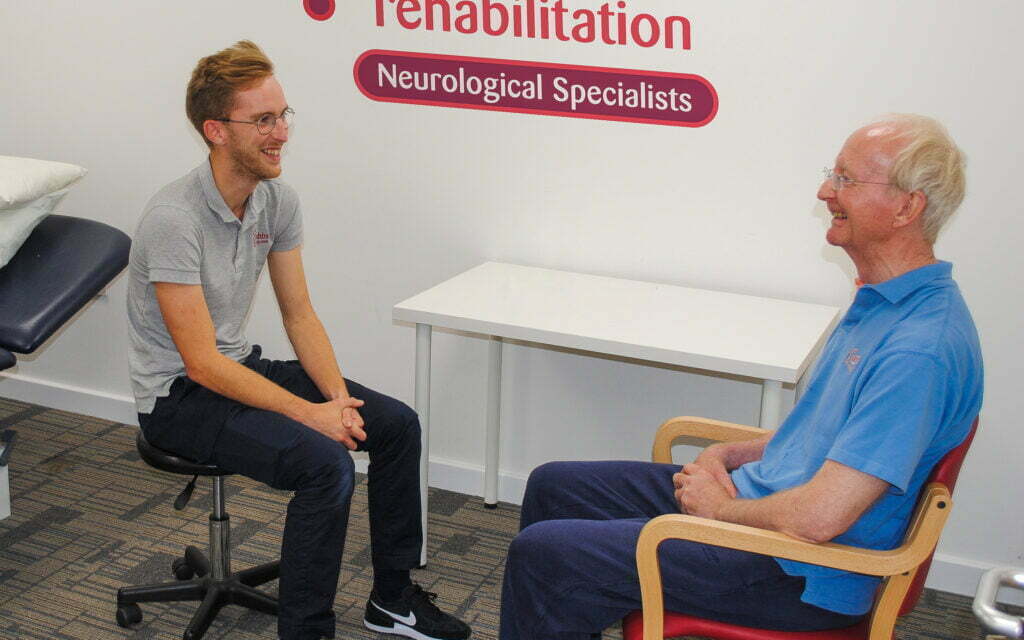
Patient sat with physiotherapist undergoing a Hobbs Rehabilitation assessment
Assess

Your therapist will recommend the best course of treatment
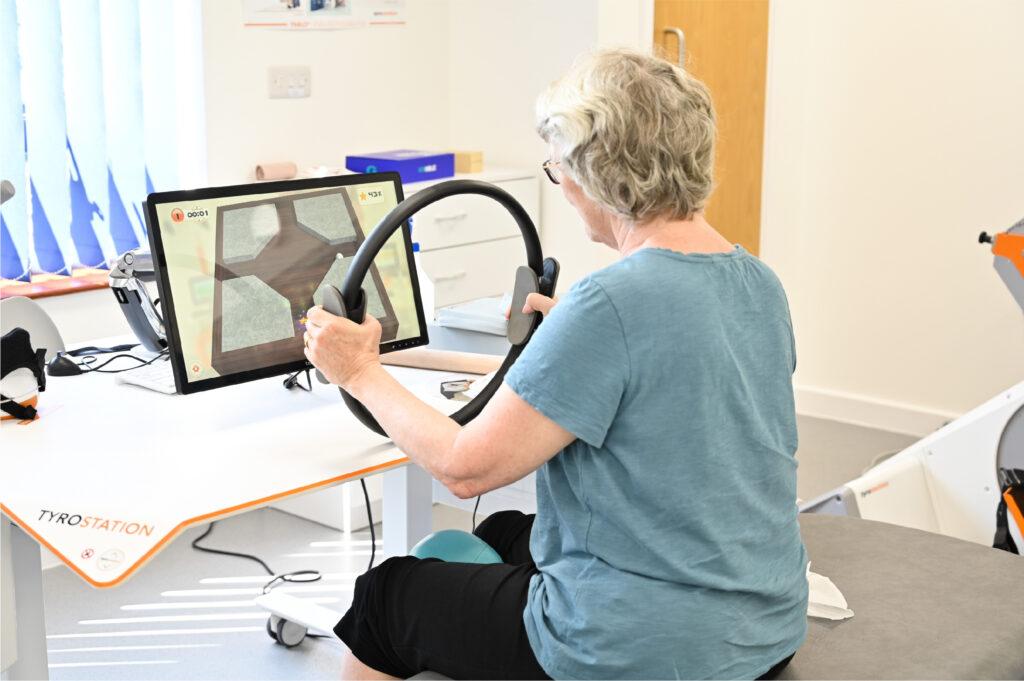
Patient on Tyromotions DIEGO as part of their neurotechnology rehabilitation
Treatment

Once you have booked you will be ready to start your treatment plan.