Robert had a posterior circulatory infarct (Left lateral medullary infarct) in May 2018. Initially required a hoist and was unable to sit unsupported during his hospital stay. Spent 2 weeks on an acute ward followed by 9 weeks in a rehabilitation unit.
Upon discharge, he engaged a private physiotherapist for ongoing support (1–2 sessions per week). He has made significant progress and currently walks using a rollator, a quad stick, or with support from his wife.
Robert came to Oaksey House May 2025 for a 4-week intensive rehab inpatient stay.
• Ongoing neurological and emotional challenges, including chronic dizziness, reduced speech clarity, and frustration with post-stroke adjustment
• Fatigue and physical deconditioning, affecting all daily activities
• Loss of participation in leisure activities, such as diving, playing the guitar and driving
• Significant right-sided motor impairments, including upper limb weakness, poor scapular stability, and increased muscle tone, limiting functional use and contributing to difficulties with walking, bed mobility, and overall movement
• Altered right limb alignment and reduced activity have led to muscle wasting, oedema, and reliance on compensatory strategies and mobility aids, affecting balance, gait quality, and increasing physical effort.
• Compensatory movements in gait such as hip swing
• Tightness in right lower limb limiting knee flexion
• Minimal engagement of right arm in daily activities
Full multi-disciplinary team input including assessment and treatment progression from physiotherapy, occupational therapy, neuropsychology, speech therapy and rehab assistant/fitness instructor.
• Upper Limb Rehabilitation: Focus on right upper limb stretching, positioning, functional use, and passive range of movement. Reviewed splinting and FES. Continued efforts to integrate the limb into daily tasks
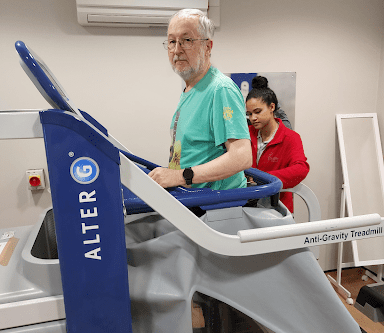
• Postural and Lower Limb Rehabilitation: Addressed right hip/trunk alignment and scapular stability to support balance and functional movement. Training included sit-to-stand, gait, core alignment, and use of equipment like Alter G and hydro pool. Emphasis on foot and calf range to improve sensory input and posture
• Activities of Daily Living (ADLs): Task-specific training for independence in personal and domestic activities (e.g. grooming, dressing, meal prep). Trialled adaptive equipment and environmental changes (e.g. profile bed) to improve functional access and reduce compensatory movement patterns
• Psychological and Cognitive Support: Engaged in neuropsychology sessions for mood, adjustment, and stress management. Demonstrated good cognitive functioning. Considering future psychological support independently and provided with resources for family and emotional wellbeing. Speech therapy was also involved
• Hydrotherapy: Hydrotherapy sessions focused on stretching, balance, gait, and gradually returning to swimming and snorkelling. He found movement in the water beneficial and would gain from accessing a local pool to continue swimming and practising snorkelling. Although previously hesitant to resume leisure activities like snorkelling due to various concerns, he has been encouraged to view this as both a therapeutic opportunity and a chance to enjoy being in the water again
• Speech and Language Therapy: Robert found speech and language sessions extremely beneficial and gave a new found confidence in social engagement
• More symmetry in gait and using walking aids less to mobilise
• Active flexion in right knee
• Improved core stability and posture in both sitting and standing
Don’t just take our word for it – take theirs.