64-year-old female, some co-morbidities but generally fit and well. 13th November 2025 presented with sensory changes which started distally through peripheries, and slowly progressed proximally, without motor involvement. MRI showed inflammation, and likely triggered by recent multiple vaccinations, as all other factors were excluded. General neurological conditions ruled out and symptoms managed conservatively.
Following the sensory change, was left with high anxiety, loss of static and dynamic balance, sensory changes distally, and neurological pain which was managed with Gabapentin.
Generally, she was very active both cognitively and physically, working full time in an executive position, and regularly riding horses, attending Pilates and Yoga classes and going for walks with family and friends. Somewhat more limited over the preceding months due to having had a partial knee replacement August 2025.
●Bilateral sensory changes, worse through the L side
●Cervical neck neural tension
●Reduced balance both static and dynamic – visual dominance for these activities, as well as difficulties with dual tasking resulting from greater cognitive effort for movements generally
●Reduced proprioception distally, and difficulties with multi-joint position sense
●Difficulty coping with ordinary activities like shopping, socializing in noisy and busy environments
●Unable to drive (cognitive strain)
●Reduced core stability
●Reduced co-ordination
●Fatigue and pacing difficulties
●Altered gait pattern, wide base of support and flat-footed walking technique. Using a walking stick inside and outside, only walking on solid and flat surfaces.
●Pain – neuropathic into extremities
●Physiotherapy – 5 reviews with 3 weeks between
– Graded exercises to progress balance
– Exploration of gait re-education
– Dual tasking practice
– Dexterity and coordination exercises for upper limb
– Sensory re-education and guidance, including vibration, light touch and temperature
– Guidance around fatigue and pacing
– Exploration of return to Pilates and horse riding
●Walking unaided inside
●Walking outside unaided (except in very busy environments), over varied terrains
●Improved static and dynamic balance
●Able to walk outside and hold a conversation with friends or family members
●Managing to use public transport independently, and organising own diary to plan accordingly
●Exploring increasing the time she is tolerating riding her horse
●Managing a ‘normal’ morning routine- caring for chickens, walking dogs and normal social life
●Returned to baking, shopping and driving short distances
●Integrating pacing principles to manage fatigue
Receiving my diagnosis of transverse myelitis was traumatic. My symptoms came on quickly over a few days and led to a ten-day hospital stay (NHS and private). The uncertainty in that first week, before I had a clear diagnosis, was particularly hard on me and my family.
The condition affected my walking and balance, and I experienced painful and debilitating numbness, pins and needles and tingling. For a short period I also had some bladder dysfunction. I left hospital shuffling, taking stairs one at a time, and needing a stick to walk anywhere outside—especially on uneven ground or in busy places.
I’m used to a busy diary, international travel and the demands of an executive role, so the sudden change was disorientating. Once I understood more about the condition and what recovery could involve, I knew I needed the right specialist support to give myself the best chance of returning to good health and to work.
I was referred to Hobbs Rehabilitation by my previous physiotherapist.
From my first phone call to my initial appointment, I felt confident I’d made the right choice. Emily’s assessment was both thorough and reassuring—she listened carefully, understood what I was experiencing, and explained a clear plan that felt realistic and achievable. I felt safe, supported, and in expert hands.
In the first few weeks, I could do very little beyond resting in a chair for much of the day. I completed short bursts of exercises most days to rebuild balance, coordination and cognitive stamina, but there were also days when I couldn’t do anything at all. Even reading for more than a few pages was difficult, and busy social environments were exhausting.
Christmas was a turning point. I wasn’t able to travel or host, but I managed Christmas lunch with two close friends locally. Taking my walking stick helped signal to others to give me space, and it lifted my confidence—only five weeks earlier, I wouldn’t have coped with the noise and visual overload.
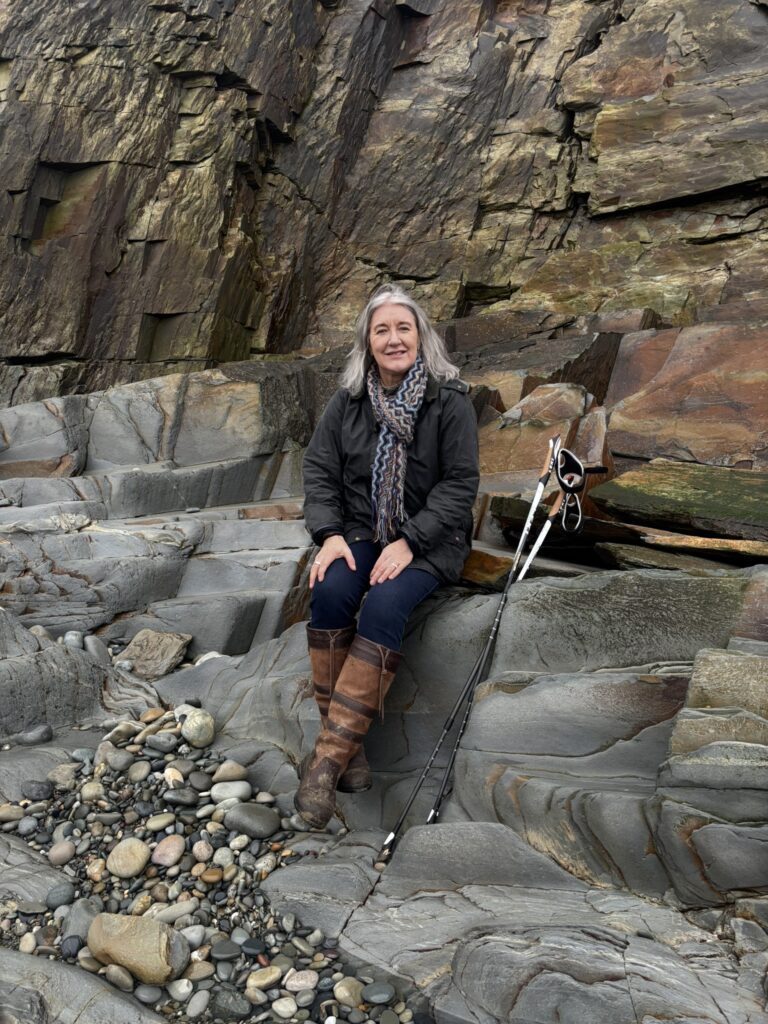
Around 6–8 weeks after diagnosis (mid-January), I began to notice meaningful changes. I no longer needed lights on at night to move around the house, and the exercises became easier so I could progress them. I was able to travel independently to London by train at off-peak times, and I could walk for an hour on uneven ground (sometimes using Nordic poles if conditions were wet or muddy). By the time of my consultant review at around eight weeks, I no longer needed a stick, and there was evidence the inflammation around the C4 lesion was settling.
By the beginning of March—around three months in—my balance had improved enough, to walk for longer unaided and for me to get on and off my horse and ride in the arena in walk, trot and a little canter for ten minutes. Riding is demanding for core strength, coordination and balance, and afterwards I felt energised (and a little wobbly from fatigue), but genuinely happy. It was an important milestone and reinforced that, with practice, patience and time, I can continue to rebuild the skills I need for daily life—and to do the things I love.
Recovery involving the nervous system takes time and a great deal of energy. Having the right support has been invaluable. Emily has been patient, kind and highly knowledgeable, and she struck exactly the right balance between encouragement and challenge. I’m very grateful for the role Hobbs Rehabilitation has played in helping me regain confidence and independence.