
Saffron sustained a spinal cord injury on 8 June 2024 following a fall during a British Eventing competition, leading to a T4/T5 fracture dislocation with spinal cord compression. Surgical intervention included T3–T7 Posterior Thoracic Instrumentation Fusion and Decompression. After initial treatment at Leeds General Hospital, she was transferred to Pinderfields SCI Unit for specialist rehabilitation, later discharged home on 8 October 2024.
SaCr remained highly motivated, demonstrating strong adjustment, engagement, and resilience throughout her rehabilitation journey.
SaCr came to for a 3 week inpatient stay at Oaksey house following a fall from a horse a year prior resulting in a complete T4 spinal cord injury. Prior to her stay, SaCr had intensive outpatient therapy 4 days a week for 2 hours
• Motor and sensory loss below the level of T4, resulting in paraplegia.
• Postural challenges and spasticity, particularly during standing and prolonged sitting.
• Upper limb overuse pain and shoulder strain related to wheelchair mobility and transfers.
• Required assistance for standing frame use due to blood pressure instability.
• Minimal assistance needed for transfers, particularly from floor to wheelchair.
• Experienced abdominal spasms and shoulder pain impacting comfort and activity tolerance.
•Full multi-disciplinary team input including assessment and treatment progression with physiotherapy, occupational therapy, neuropsychology, and rehab assistant/fitness instructor.
•Facilitated trial of different standing frames (Oswestry and Quest 88/Delta) to determine optimal long-term standing support.
•Conducted posture and wheelchair assessments, recommending backrest modifications to improve balance and comfort.
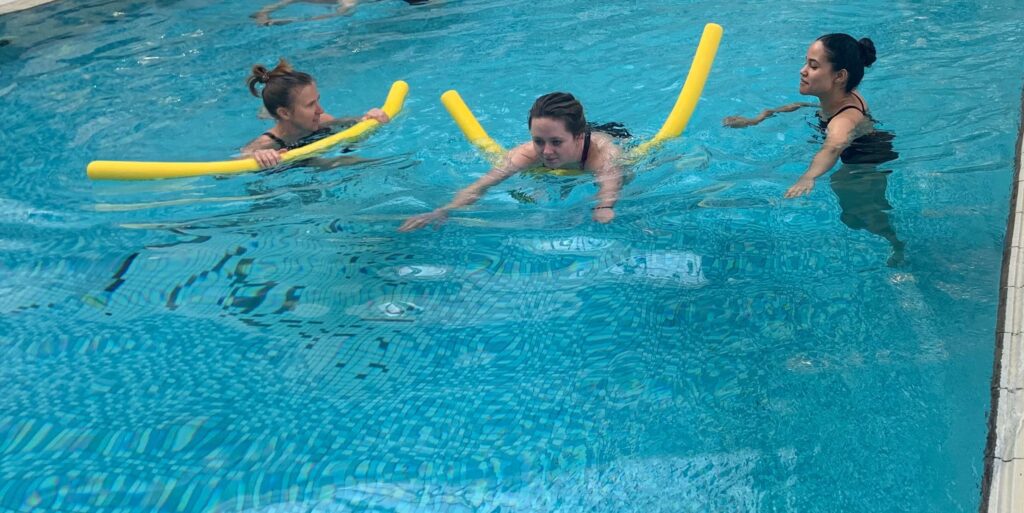
•Supported community-based functional activities, including car transfers, petrol station visits, and hydrotherapy sessions to enhance confidence and independence
•Independent with bed mobility, car transfers, and most daily living tasks.
•Able to manage kerbs up to 4 inches with supervision and descend independently using back-wheel balance.
•Independent in pool mobility, completing multiple swimming lengths and self-managing dressing and transfers
Don’t just take our word for it – take theirs.