Placing You at the Centre of Care

Parkinson's

Parkinson's Rehabilitation

Parkinson’s is a long-term neurological condition most often affecting those aged 50 years and above; however, it can also affect those as young as 30 or 40 and this is known as Young-onset Parkinson’s. Therapy can include a multidisciplinary approach involving physiotherapists, occupational therapists, speech and language therapists and clinical neuropsychologists with 1:1 therapy (including Lee Silverman Voice Therapy), group sessions and exercise classes all available. 

Neurological Rehabilitation for Parkinson's

Evidence shows the most effective way to rehab is with high intensity; the brain requires adequate repetition to get the most benefit from neurological therapy. Our intensive programmes for patients with Parkinson’s aim to inspire healthy lifestyle behaviours to help maintain physical and psychological well-being as well as to build knowledge about how to take control of Parkinson’s with a therapeutic approach. Hobbs Rehabilitation offers Parkinson’s rehabilitation across inpatient, outpatient, and community-based settings.

Rehabilitation for Parkinson's

Hobbs Rehabilitation’s multidisciplinary approach aims to optimise recovery and promote a better quality of life, helping reconnect with valued activities relating to work, sport, education, family and social life. Hobbs Rehabilitation offers inpatient, outpatient, and community-based rehabilitation.

Hydrotherapy Icon 2 | Hobbs Rehabilitation

Aquatic Physiotherapy

Utilise the water environment to help restore movement, enhance muscle strength and improve balance.

Icon2 06 | Hobbs Rehabilitation

Clinical Neuropsychology

Address cognitive, emotional and behavioural changes that can result from a long-term condition.

Exercise Group icon | Hobbs Rehabilitation

Exercise Groups

Elevate your rehabilitation journey by staying active with PD Warrior and other activities.

LSVT Icon | Hobbs Rehabilitation

LSVT LOUD

Intensive speech therapy aimed at improving vocal loudness and clarity in individuals with Parkinson’s.

Music Therapy Icon | Hobbs Rehabilitation

Neurological Music Therapy

Achieve physical, cognitive and emotional rehabilitation goals by engaging with music.

Neurotechnology Icon 2 | Hobbs Rehabilitation

Neurotechnology

Increase the number of repetitions to unlock your potential with cutting-edge technology.

Icon2 04 | Hobbs Rehabilitation

Occupational Therapy

Guiding individuals with a long-term condition to maintain their independence and address challenges in daily life.

Orthotics Icon | Hobbs Rehabilitation

Orthotics

Providing support and correction, addressing mobility, promoting proper posture and enhancing gait.

Icon2 03 03 | Hobbs Rehabilitation

Physiotherapy

Improve balance and mobility and enhance muscle strength while reducing stiffness and pain.

Rehab Assistant Icon New | Hobbs Rehabilitation

Rehabilitation Assistant

Supporting exercises and daily activities, guided by our therapists to enhance progress and well-being.

Rehab Consultant Icon 2 | Hobbs Rehabilitation

Rehabilitation Medicine

Maximise functional independence and elevate quality of life with a specialist consultant.

Icon2 05 | Hobbs Rehabilitation

Speech and Language

Help with speech, swallowing, written communication and non-verbal expression.

Specific Exercise for Parkinson's

Fight the symptoms with PD Warrior.

TG Brain Injury Laverstock Case Study e1734363329496 | Hobbs Rehabilitation

Neurological Rehabilitation at Laverstock in Salisbury

Our facility at Laverstock Care Centre in Salisbury is a self-contained, dedicated rehabilitation unit with ensuite patient rooms, a large gym, access to outdoor space, and a communal dining area. Hobbs Rehabilitation, along with our local care providers, Caring Homes, provides multidisciplinary neurological and intensive rehabilitation. Therapy can be provided on either an inpatient or outpatient basis.

The exciting development of assistive neurotechnology and robotics has allowed clinicians to significantly increase the number of repetitions achieved during sessions and improve patient outcomes when therapy is given over a shorter period. Working intensively, you will start to make neuroplastic changes in your brain much quicker than conventional therapy and notice positive changes within weeks.

Intensive therapy at Salisbury includes physiotherapy, occupational therapy, speech & language therapy, clinical neuropsychology and rehabilitation assistants.

Learn More About Intensive Rehabilitation

Our multidisciplinary team at Salisbury deliver a variety of neurological therapies, both as an inpatient and an outpatient. Whether you have a long-term condition such as multiple sclerosis or are living with the effects of a stroke, spinal cord or brain injury or another neurological condition, our therapies are designed to help.

Our dedicated team are ready to assist you in navigating towards the optimal treatment plan tailored to your individual needs and goals.

Neurological therapies at Laverstock Care Centre include:

New Era of Neurorehab

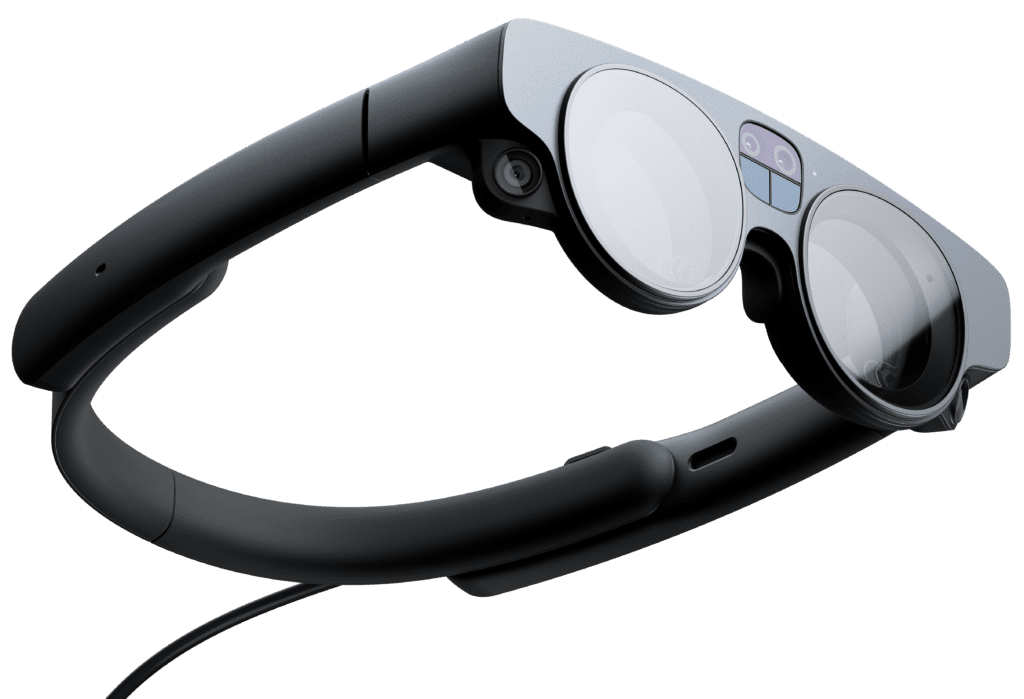
Strolll’s Reality DTx® augmented reality (AR) glasses offer an innovative way to support cueing therapy and gamified exercise through a lightweight, wearable device. Augmented reality enhances your real-world environment by overlaying digital images, sounds, or text, helping to improve gait, balance, and reduce the risk of falls for individuals with Parkinson’s and other neurological conditions.

To ensure accessible and flexible therapy, Reality DTx can be used at our outpatient centres in Liss and Winchester or rented for home use, with virtual progress reviews to support your rehabilitation journey.

Learn More About Reality DTx® by Strolll
Reality DTx Hardware Strolll | Hobbs Rehabilitation

As each individual responds differently to Parkinson’s, Hobbs Rehabilitation neuro physiotherapists aim to individualise your treatment.

Some of our Parkinson’s physiotherapy treatments can help you to:

  • Reduce rigidity and improve posture through stretching and postural re-education
  • Increase speed and amplitude of movements through muscle strengthening and mobilisation exercises
  • Teach ‘cueing strategies’ which will help a great deal with the quality of movement
  • Increase mobility through assessment of different mobility aids
  • Reduce muscle stiffness, spasms and pain through stretching programmes
  • Reduce postural instability and balance problems through core stability exercises and balance training
  • Reduce the risk of falls through balance work, gait re-education and strengthening
  • Increase functional independence and quality of life
  • Advice on fatigue management
  • Combine stretching, aerobic exercise, strengthening, tai chi and relaxation techniques through weekly PD Warrior exercise classes


Read more on Physiotherapy

Hobbs Rehabilitation specialist occupational therapists aim to improve areas of personal care, work or leisure that are becoming difficult with Parkinson’s.

Our occupational therapists can achieve this through:

  •  Functional activities independently or in groups
  •  Cognitive measures to assist with memory difficulties
  •  Assessment of function in your own environment and establish any needs for equipment, adaptations, or further rehabilitation
  • Hand therapy including splinting and exercise programmes
  • Assessment and treatment of cognitive deficits
  • Strategies to improve problem-solving abilities and memory
  • Handwriting techniques and adaptive equipment

Read more on Occupational Therapy

About 70-80% of people with Parkinson’s experience difficulty with excess saliva and swallowing.  Many people with Parkinson’s find difficulty with the volume, tone and pitch of their voice and often speech becomes much quieter as a result.  

Hobbs Rehabilitation specialist speech and language therapist can help you through:

  • Training for family and carers on how to communicate with someone with Parkinson’s Disease
  • Lee Silverman Voice Treatment: our speech and language therapists are some of the few trained clinicians in the UK, able to provide this effective treatment to improve speech in people with Parkinson’s
  • Advice on communication aids
  • Treatment at the centre or in your own home

Read more on Speech and Language Therapy

Hobbs Rehabilitation clinical neuropsychologists can help Parkinson’s by providing:

  • Detailed assessment of a patient’s functioning, in particular their cognition, behaviour and emotional state
  • Advice, consultation, teaching and supervision to other professionals as well as family and carers
  • Management and advice for anxiety and changes in mood

Read more on Clinical Neuropsychology

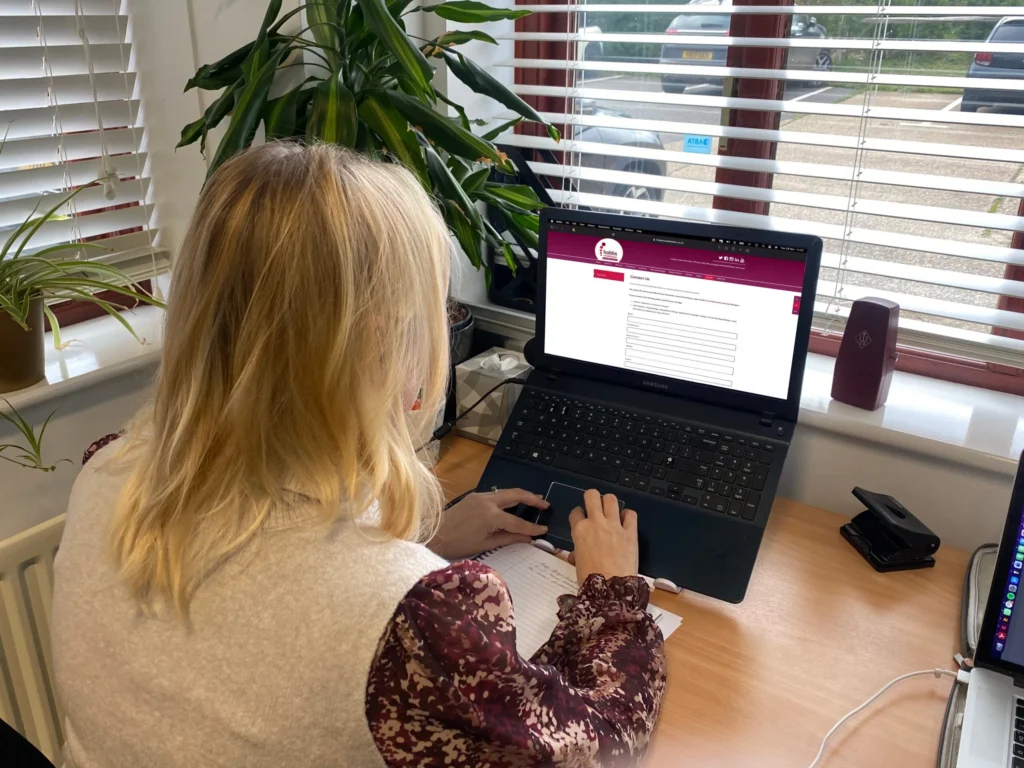
Patient entering details onto an enquiry form on a laptop
Enquire

Enquire today about any of our services or packages

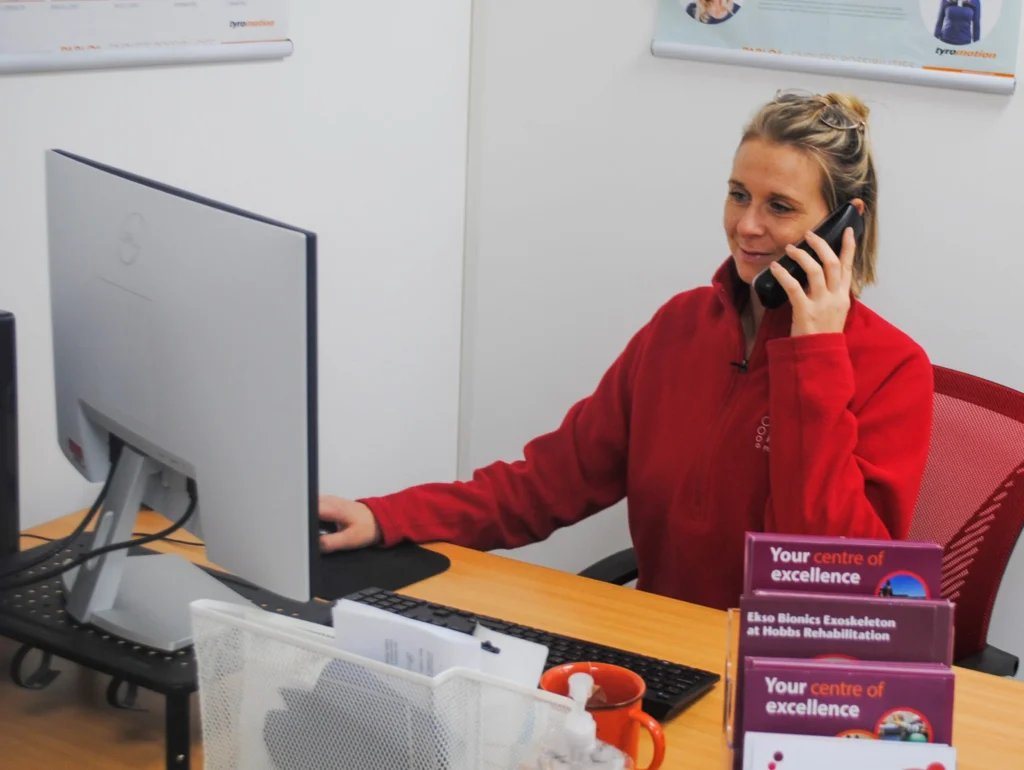
Team member on the telephone at a computer
Screen

You will be contacted to determine your needs and assessment location

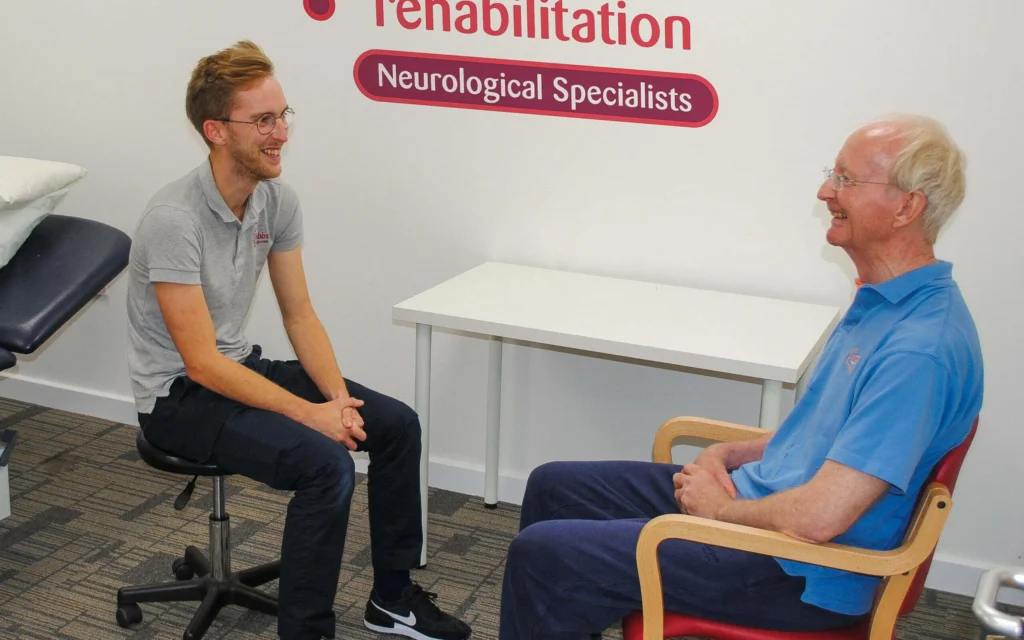
Physiotherapist and patient sat facing towards each other, participating in an assessment consultation
Assess

Your therapist will recommend the best course of treatment

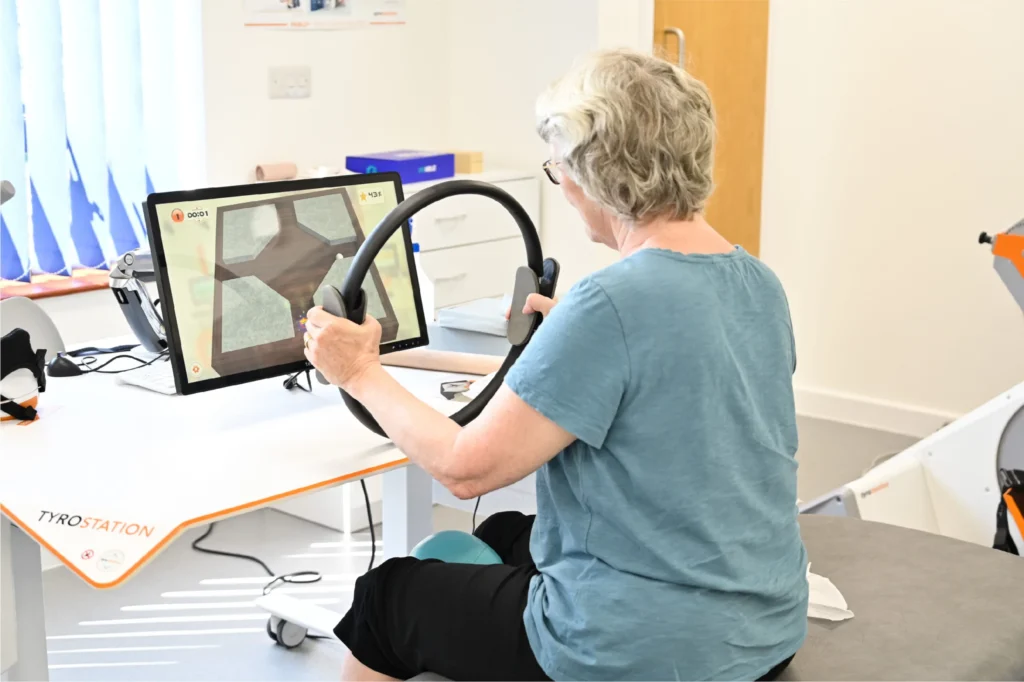
Patient sat at a desk using the DIEGO with a gamified steering wheel and game on a screen
Treatment

Once you have booked you will be ready to start your treatment plan.

What to Expect

During the early stages of Parkinson’s Hobbs Rehabilitation recommends an initial assessment followed by at least one or more follow-up appointments. A future review at either six, nine or twelve months is recommended to check in and adjust treatment as required. At the later stages of Parkinson’s, our recommendation would be an intensive rehabilitation package.

During the assessment, your therapist will discuss your clinical history and recommend the best treatment course. They will discuss which therapy is best suited to your condition as well as consider your needs and personal goals and refer you to our wider multidisciplinary team when required.

Let's Get Started

We offer our services in inpatient, outpatient and community settings – find your nearest centre

Alternatively, call us on 01962 779796 to talk with our team or fill out our enquiry form on our contact page.

We accept self-referrals and referrals from Medico-Legal, health and social care professionals and the charity sector.

More Repetitions + Shorter Timespan = Better Results

Intensive rehabilitation available at specific locations.

What Our Patients Say

Don’t just take our word for it – take theirs