Specialist Rehabilitation for Progressive Supranuclear Palsy
Progressive supranuclear palsy (PSP) is a rare, progressive neurological condition that affects areas of the brain responsible for movement, balance, eye movements and other functions. Symptoms can include stiffness, difficulties walking, changes in posture, falls, and problems with speech, swallowing and everyday activities.
Although there is currently no cure for PSP, specialist rehabilitation can help manage symptoms, address practical challenges and support quality of life. Our team provides personalised treatment based on your needs, abilities and goals, adapting support as your condition changes.
Rehabilitation Tailored to Your Needs
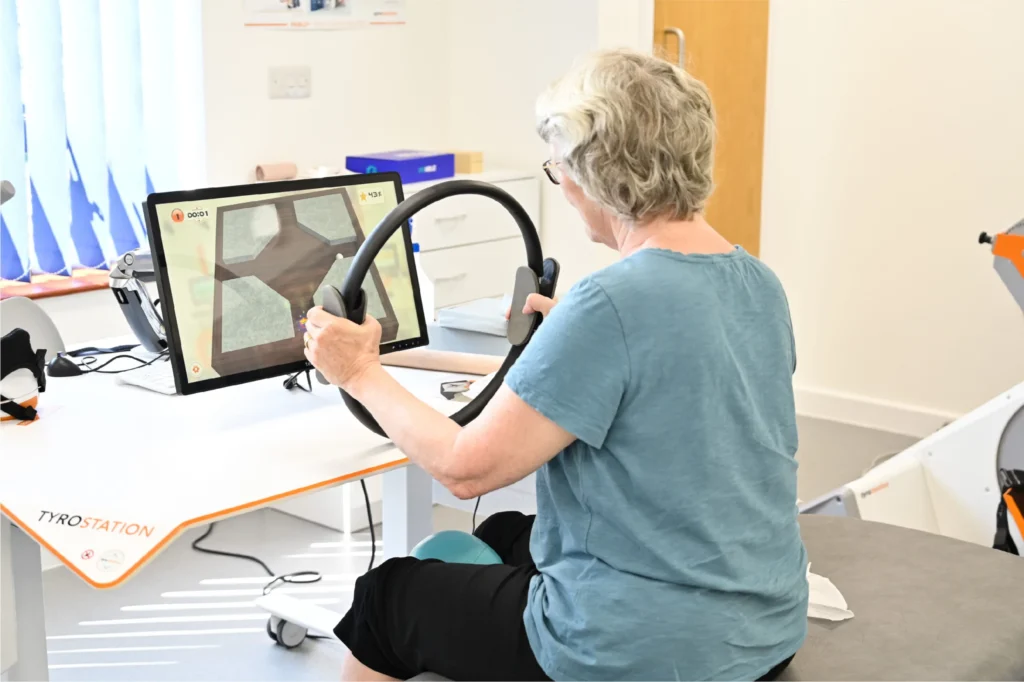
Rehabilitation for PSP focuses on maintaining function where possible, supporting safety and helping you manage changes in everyday life. Depending on your needs, treatment may include Neurological Physiotherapy, Occupational Therapy, Speech and Language Therapy and Clinical Neuropsychology. Our team can also work with family members, carers and your wider healthcare team to support your changing needs.
How Our Expert Team Can Assist You
PSP affects each person differently. Our specialist team can support you to:
Maintain mobility and physical function
Improve balance and movement control
Reduce falls risk and support safer mobility
Manage muscle stiffness and discomfort
Improve posture and positioning
Adapt everyday activities to changing needs
Maintain independence where possible
Assess mobility aids and supportive equipment
Support speech and communication
Manage swallowing difficulties
Address cognitive and emotional changes
Help family members and carers understand changing needs
Placing You at the Centre of Care
Hobbs Rehabilitation provides a multidisciplinary service to help ensure that every individual can reach their full potential.
Your rehabilitation programme is tailored to your needs, goals and circumstances, and may involve one or more disciplines depending on your requirements.
Single-discipline therapy
Multidisciplinary rehabilitation
Gentle movement and range-of-movement exercises
Balance and mobility training
Walking and transfer practice
Postural and positioning strategies
Functional task practice
Assessment for mobility aids and adaptive equipment
Strategies for everyday activities and energy conservation
Communication strategies and aids
Swallowing assessment and management
Cognitive strategies and psychological support
Enquire
Enquire today about any of our services or packages
Screen
You will be contacted to determine your needs and assessment location
Assess
Your therapist will recommend the best course of treatment
Treatment
Once you have booked you will be ready to start your treatment plan.
Meet the Team
Our team is made up of highly experienced clinicians who are passionate about supporting people through their rehabilitation journey. Each member brings specialist knowledge, clinical expertise, and a patient-centred approach to their work.
We accept self-referrals and referrals from Consultants, General Practitioners, other Health Care Professionals and Case Managers, at the following Hobbs Rehabilitation centres for this condition:
Explore a range of common questions and see how you may benefit from an assessment. If your question still isn’t answered, get in touch – contact us.
What is progressive supranuclear palsy?
PSP is a rare, progressive neurological condition caused by damage to nerve cells in parts of the brain. It can affect movement, balance, eye movements, speech, swallowing and thinking. Symptoms and the rate of progression vary between individuals.
Can rehabilitation help with PSP?
Rehabilitation cannot cure PSP or stop its progression, but it can help manage symptoms, address practical difficulties and support safety, function and quality of life. Treatment is tailored to the individual and reviewed as needs change.
How can Physiotherapy help with PSP?
Neurological Physiotherapy may help maintain movement, work on balance and mobility, practise transfers and develop strategies to reduce fall risk. Exercises and activities are adapted to each person’s abilities and safety needs.
Can Occupational Therapy help with everyday activities?
Yes. Occupational Therapy can help people adapt daily tasks, explore ways to maintain independence and identify equipment or changes to the home environment that may make activities safer and more manageable.
Can rehabilitation help with speech and swallowing?
Speech and Language Therapy can assess communication and swallowing difficulties and provide appropriate strategies, exercises or communication aids. Swallowing difficulties should be assessed by a suitably qualified clinician, as they can affect safety and nutrition.
Can PSP affect thinking and behaviour?
Yes. Some people experience changes in thinking, concentration, decision-making, behaviour or emotional wellbeing. Support may include practical strategies, advice for family members and carers, and input from Clinical Neuropsychology where appropriate.
What equipment might help someone with PSP?
Depending on individual needs, equipment may include walking aids, wheelchairs, seating and positioning supports, or aids for everyday activities. Recommendations should follow an individual assessment and take account of safety and changing needs.
Can rehabilitation support family members and carers?
Yes. Rehabilitation can provide guidance on safe mobility, transfers, communication and adapting daily activities. Support can be reviewed as the person’s needs change.
Can I receive rehabilitation at home?
Home-based rehabilitation may be available depending on your location, needs and the services available. Your team can discuss suitable options and whether a home assessment may be helpful.
How often should someone with PSP have rehabilitation?
This depends on individual needs, goals, abilities and safety considerations. Your rehabilitation team can recommend an appropriate approach and review it as the condition changes.
Our Credentials
Hobbs Rehabilitation is committed to maintaining recognised credentials, professional memberships and high standards of safeguarding across our services.