A spinal cord injury (SCI) can affect movement, sensation and many aspects of everyday function. The effects vary depending on the level and severity of the injury, whether the injury is complete or incomplete, and the individual circumstances of each person.
Our specialist spinal cord injury rehabilitation team provides personalised assessment and treatment to help you work towards your individual goals. Rehabilitation can support people following traumatic spinal cord injury as well as injuries or conditions resulting from other causes.
Rehabilitation Focused on Your Independence
Our multidisciplinary team can support you throughout your rehabilitation journey, from managing the effects of your injury and developing functional skills through to returning to everyday activities, exercise, work and leisure. Your programme is regularly reviewed and adapted as your needs and goals change, with rehabilitation available across different settings where appropriate.
Clinical Neuropsychology for Spinal Cord Injuries
In your rehabilitation journey, psychological support can be invaluable. A spinal cord injury is a transformative experience, and at times, it’s essential to seek guidance from qualified professionals to navigate this profound change.
Comprehensive Assessment: Evaluating patients’ functioning, particularly in terms of cognition, behaviour, and emotional well-being.
Guidance and Consultation: Providing expert advice, consultations, educational sessions, and supervision to both healthcare professionals and the support network, including family and caregivers.
Anxiety and Mood Management: Offering strategies and recommendations to address anxiety and mood changes, ensuring holistic well-being during the recovery process.
Transitioning to Independence: For individuals striving to regain independence, clinical neuropsychologists offer guidance on building resilience, self-advocacy, and adapting to new roles and responsibilities.
Occupational Therapy for Spinal Cord Injuries
Occupational Therapy (OT) in Spinal Cord Injury Rehabilitation includes a vast spectrum of areas, including sexual function, vocational rehabilitation, and driving. At Hobbs Rehabilitation, our occupational therapists have the expertise and skills to assist you in your journey back to work, addressing equipment and accessibility challenges that may arise. Whether you’re returning to your previous role or exploring new opportunities, our OTs are here to support you in finding interesting and enjoyable roles. Additionally, we offer guidance on overcoming equipment-related obstacles in your home.
Home Environment Assessment: Identifying equipment, adaptations, or further rehabilitation needs to enhance function at home.
Vocational Rehabilitation: Supporting your return to work and vocational pursuits.
Hand Therapy: Including splinting and exercise programs to improve hand function.
Wheelchair Set-Up Assessment: Ensuring your wheelchair is optimally configured for your needs.
Pressure Relief Management: Providing advice and techniques for pressure relief through bed positioning and seating adaptations.
Sensation Adaptation Management: Education and strategies to help you adapt to and manage altered sensation.
Community Skills: Working on community management (e.g., wheelchair skills) through outings to shops, pubs, or friends’ houses.
Functional Activities: Either independently or in group settings.
Exploration of Hobbies and Leisure Activities: Discovering past and new interests and leisure activities, all while utilising your wheelchair effectively.
Physiotherapy for Spinal Cord Injuries
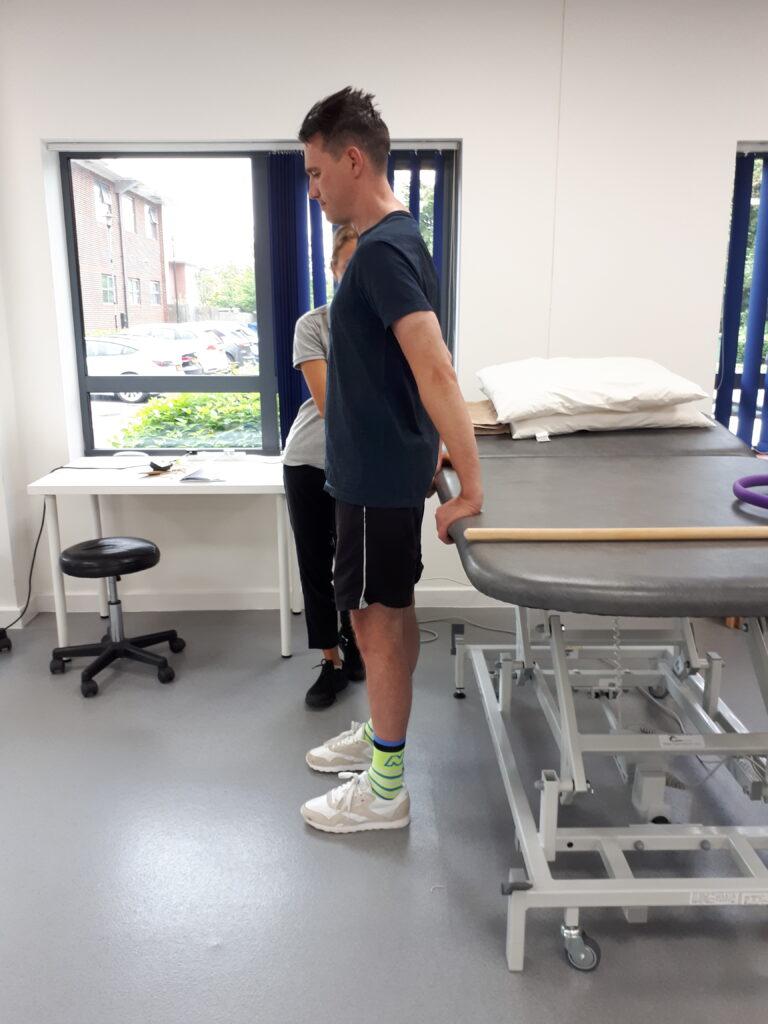
Neurological physiotherapy for spinal cord injury combines hands-on therapy and activity-based rehabilitation to help you achieve your maximum level of functional independence, regardless of your injury level. Our rehabilitation is goal-driven, with objectives set at the beginning and regularly reassessed throughout your rehabilitation journey. Additionally, physiotherapy explores your return to sports, swimming, gym/cardiovascular fitness, and recreational activities.
Enhancing Functional Independence: Through muscle strengthening, stretching, tone and spasticity management, gait re-education (where appropriate), and functional practice like transfers and wheelchair skills.
Improving Balance and Mobility: By assessing various seating and mobility aids and providing postural re-education through guided exercises.
Upper Limb Functional Rehabilitation: Collaborating with occupational therapists to address specific upper limb functional challenges.
Supporting Return to Exercise and Fitness: Both before and after discharge, facilitating a smooth transition.
Accessing Functional Electrical Stimulation (FES): Identifying suitable modalities for your rehabilitation.
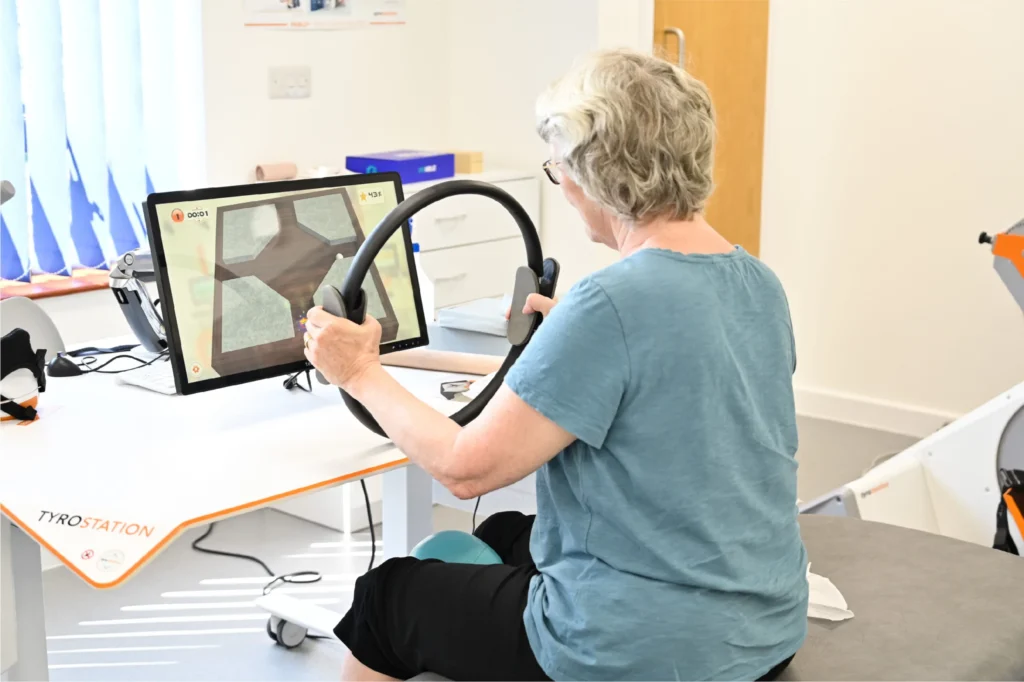
Evaluating the Benefits of the Exoskeleton: As an adjunct to your rehabilitation journey, we can explore the potential advantages of the exoskeleton.
Spinal Cord Injury Education: To empower you with knowledge about your condition.
Through the expertise of our physiotherapists, individuals with spinal cord injuries can regain function, improve mobility, and enhance their overall quality of life.
How Our Expert Team Can Assist You
Symptoms vary widely for spinal cord injuries based on many different factors, such as the injury type, severity and location; therefore, our treatment plans are designed to address and educate the specific symptoms and needs of each individual.
Improve functional independence
Develop mobility skills
Improve strength and fitness
Manage muscle tone and spasticity
Develop wheelchair skills
Manage pain
Manage fatigue
Adapt to sensory changes
Manage altered sexual function
Manage bladder and bowel changes
Support skin and pressure care
Support psychological wellbeing
Adjust to changes in everyday life
Prepare for return to work, sport and exercise
Explore hobbies and leisure
Placing You at the Centre of Care
Hobbs Rehabilitation provides a multidisciplinary service to help ensure that every individual can reach their full potential.
Your rehabilitation programme is tailored to your needs, goals and circumstances, and may involve one or more disciplines depending on your requirements.
Single-discipline therapy
Multidisciplinary rehabilitation
Strength and conditioning
Mobility and transfer training
Wheelchair skills training
Balance and postural training
Gait and walking rehabilitation where appropriate
Functional task practice
Tone and spasticity management
Pressure relief and positioning
Hand therapy and splinting
Functional electrical stimulation
Community-based rehabilitation
Upper limb rehabilitation
Outcome measurement
Enquire
Enquire today about any of our services or packages
Screen
You will be contacted to determine your needs and assessment location
Assess
Your therapist will recommend the best course of treatment
Treatment
Once you have booked you will be ready to start your treatment plan.
Levels of Spinal Cord Injury
Our service supports people with spinal cord injuries at different levels and severities, with rehabilitation tailored to each person’s individual needs and goals.
Our team is made up of highly experienced clinicians who are passionate about supporting people through their rehabilitation journey. Each member brings specialist knowledge, clinical expertise, and a patient-centred approach to their work.
We accept self-referrals and referrals from Consultants, General Practitioners, other Health Care Professionals and Case Managers, at the following Hobbs Rehabilitation centres for this condition:
Explore a range of common questions and see how you may benefit from an assessment. If your question still isn’t answered, get in touch – contact us.
What is a spinal cord injury?
A spinal cord injury occurs when the spinal cord is damaged, affecting the transmission of signals between the brain and the body. It can result from a traumatic injury, such as a fracture or dislocation of the spine, or from non-traumatic causes including tumours and inflammatory conditions.
What are the effects of spinal cord injury?
The effects depend on the level and severity of the injury and can include muscle weakness, altered sensation, mobility difficulties, bladder and bowel changes, pain, fatigue, changes in muscle tone and spasticity, and difficulties with everyday activities.
What is the difference between a complete and incomplete spinal cord injury?
A complete spinal cord injury involves a complete loss of sensory and motor function below the level of the injury, while an incomplete injury means that some sensory or motor function remains below the level of injury. The effects of an incomplete injury can vary considerably between individuals.
How is a spinal cord injury classified?
Healthcare professionals may use the International Standards for Neurological Classification of Spinal Cord Injury (ISNCSCI), commonly referred to as the ASIA examination, to assess the neurological level and severity of an injury. Classification can also be used to monitor changes over time.
Can rehabilitation help me become more independent?
Rehabilitation can help you develop physical and functional skills, learn strategies for managing the effects of your injury and practise everyday activities. Your goals will depend on your individual abilities, circumstances and priorities.
Can I continue rehabilitation after leaving hospital?
Yes. Ongoing rehabilitation can be an important part of life following hospital discharge. Depending on your needs, this may include outpatient or home-based rehabilitation, with treatment adapted as your goals and circumstances change.
Can I return to exercise or sport after a spinal cord injury?
Rehabilitation can support a return to exercise, fitness, swimming, sport and recreational activities where appropriate. Your therapists can help you identify suitable activities and work towards the physical and functional skills needed to participate safely.
Can rehabilitation support my return to work?
Yes. Occupational Therapy can help identify the physical, functional and accessibility considerations involved in returning to work or exploring new vocational activities. This may include workplace adaptations, equipment, fatigue management and developing strategies for everyday tasks.
Our Credentials
Hobbs Rehabilitation is proud to be recognised by leading organisations and professional bodies.
Our rehabilitation stories highlight individual experiences of recovery at Hobbs Rehabilitation, following personal journeys, goals and milestones to show the impact of therapy beyond clinical outcomes.