Parkinson’s is a long-term neurological condition that affects movement and can also impact balance, coordination, speech, cognition and emotional wellbeing. Symptoms vary between individuals and can change over time. Parkinson’s can develop at any age, including in younger adults, sometimes referred to as young-onset Parkinson’s.
Our specialist rehabilitation team provides personalised treatment to help you manage symptoms, maintain function and work towards your individual goals. Rehabilitation may include Neurological Physiotherapy, Occupational Therapy, Speech and Language Therapy and Clinical Neuropsychology, with individual sessions, group activities and exercise programmes available where appropriate.
Rehabilitation Tailored to Your Needs
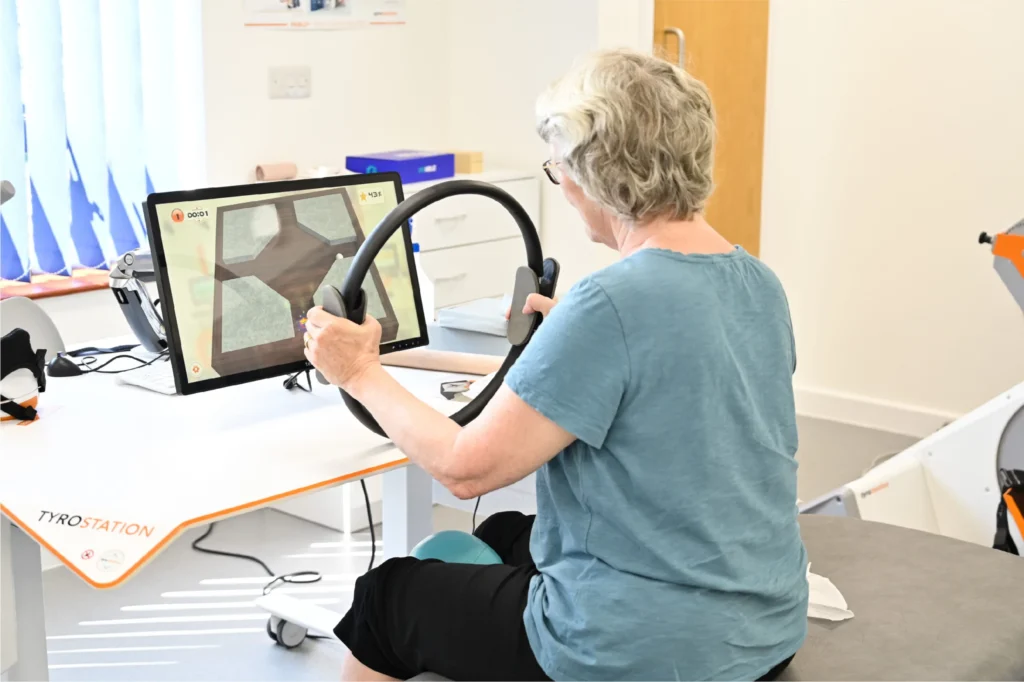
Rehabilitation can help you develop strategies to manage movement difficulties, maintain independence and stay involved in everyday activities. Treatment may include movement practice, cueing strategies, balance training, communication support and cognitive or psychological strategies. We also offer PD Warrior classes, an exercise-based programme designed specifically for people with Parkinson’s. Intensive rehabilitation and neurotechnology, including Strolll, may also be considered depending on your needs and goals.
Parkinson's Physiotherapy
As each individual responds differently to Parkinson’s, Hobbs Rehabilitation neuro physiotherapists aim to individualise your treatment.
Some of our Parkinson’s physiotherapy treatments can help you to:
Reduce rigidity and improve posture through stretching and postural re-education
Increase speed and amplitude of movements through muscle strengthening and mobilisation exercises
Teach ‘cueing strategies’ which will help a great deal with the quality of movement
Increase mobility through assessment of different mobility aids
Reduce muscle stiffness, spasms and pain through stretching programmes
Reduce postural instability and balance problems through core stability exercises and balance training
Reduce the risk of falls through balance work, gait re-education and strengthening
Increase functional independence and quality of life
Advice on fatigue management
Combine stretching, aerobic exercise, strengthening, tai chi and relaxation techniques through weekly PD Warrior exercise classes
Hobbs Rehabilitation specialist occupational therapists aim to improve areas of personal care, work or leisure that are becoming difficult with Parkinson’s.
Our occupational therapists can achieve this through:
Functional activities independently or in groups
Cognitive measures to assist with memory difficulties
Assessment of function in your own environment and establish any needs for equipment, adaptations, or further rehabilitation
Hand therapy including splinting and exercise programmes
Assessment and treatment of cognitive deficits
Strategies to improve problem-solving abilities and memory
About 70-80% of people with Parkinson’s experience difficulty with excess saliva and swallowing. Many people with Parkinson’s find difficulty with the volume, tone and pitch of their voice and often speech becomes much quieter as a result.
Hobbs Rehabilitation specialist speech and language therapist can help you through:
Training for family and carers on how to communicate with someone with Parkinson’s Disease
Lee Silverman Voice Treatment: our speech and language therapists are some of the few trained clinicians in the UK, able to provide this effective treatment to improve speech in people with Parkinson’s
Your rehabilitation programme is tailored to your needs, goals and circumstances, and may involve one or more disciplines depending on your requirements.
Single-discipline therapy
Multidisciplinary rehabilitation
Strength and condtioning
Balance and postural training
Movement amplitude and cueing practice
PD Warrior classes
Lee Silverman Voice Treatment
Cognitive rehabilitation and practical strategies
Communication and swallowing rehabilitation
Fatigue management
Neurotechnology-assisted rehabilitation
Intensive rehabilitation programme
Enquire
Enquire today about any of our services or packages
Screen
You will be contacted to determine your needs and assessment location
Assess
Your therapist will recommend the best course of treatment
Treatment
Once you have booked you will be ready to start your treatment plan.
Meet the Team
Our team is made up of highly experienced clinicians who are passionate about supporting people through their rehabilitation journey. Each member brings specialist knowledge, clinical expertise, and a patient-centred approach to their work.
We accept self-referrals and referrals from Consultants, General Practitioners, other Health Care Professionals and Case Managers, at the following Hobbs Rehabilitation centres for this condition:
Explore a range of common questions and see how you may benefit from an assessment. If your question still isn’t answered, get in touch – contact us.
What is Parkinson’s?
Parkinson’s is a progressive neurological condition that affects movement. Common symptoms include slowness of movement, muscle stiffness and tremor. It can also affect balance, speech, swallowing, cognition and mood.
Can rehabilitation help with Parkinson’s?
Rehabilitation can help you manage symptoms, maintain physical function and work towards your personal goals. Treatment is tailored to your needs and may change as your symptoms and priorities change over time.
What is young-onset Parkinson’s?
Young-onset Parkinson’s refers to Parkinson’s diagnosed at a younger age than is typical, often before the age of 50. Rehabilitation can help address the specific challenges and goals that may arise at different life stages.
How can Physiotherapy help with Parkinson’s?
Neurological Physiotherapy can work on walking, balance, posture, strength, coordination and movement control. Cueing strategies may also help some people manage difficulties starting or continuing movements, including freezing of gait.
What are PD Warrior classes?
PD Warrior is an exercise-based programme designed specifically for people with Parkinson’s. Classes use targeted, high-effort exercises and movement practice to work on mobility, balance and everyday function. Suitability and participation depend on individual needs and abilities.
What is LSVT LOUD?
LSVT LOUD is a specialist speech therapy programme that focuses on improving vocal loudness and supporting communication for people with Parkinson’s. A Speech and Language Therapist can assess whether it is suitable for you.
What is Strolll?
Strolll uses augmented reality technology to provide visual and interactive cues during movement practice. Where appropriate, it may be used as part of rehabilitation to support gait, balance and movement training. Availability depends on suitability and the rehabilitation setting.
Can rehabilitation help with speech, swallowing or memory difficulties?
Yes. Speech and Language Therapy can support communication and swallowing difficulties. Clinical Neuropsychology and Occupational Therapy may help with thinking, memory, everyday strategies and psychological adjustment, depending on your needs.
Is intensive rehabilitation suitable for everyone with Parkinson’s?
Not everyone needs or is suited to an intensive programme. The recommended approach depends on your symptoms, abilities, goals and overall health. Your team can discuss suitable options with you.
Can I have rehabilitation at home?
Home-based options depend on your location, needs and the services available. Some rehabilitation technology may also be suitable for home use, subject to assessment and availability.
How often should I have rehabilitation?
This depends on your goals, symptoms and individual circumstances. Your rehabilitation team can recommend an appropriate approach and review it as your needs change.
Our Credentials
Hobbs Rehabilitation is committed to maintaining recognised credentials, professional memberships and high standards of safeguarding across our services.